







Imagine this: you’re walking through a clothing store, running your hand across racks of vibrant fabrics, feeling the thrill of a fresh wardrobe. But beneath the colors and textures, there’s something darker woven into the seams—polluted rivers, exploited workers, overflowing landfills.
This isn’t just fashion; it’s fast fashion. And it’s killing the planet.
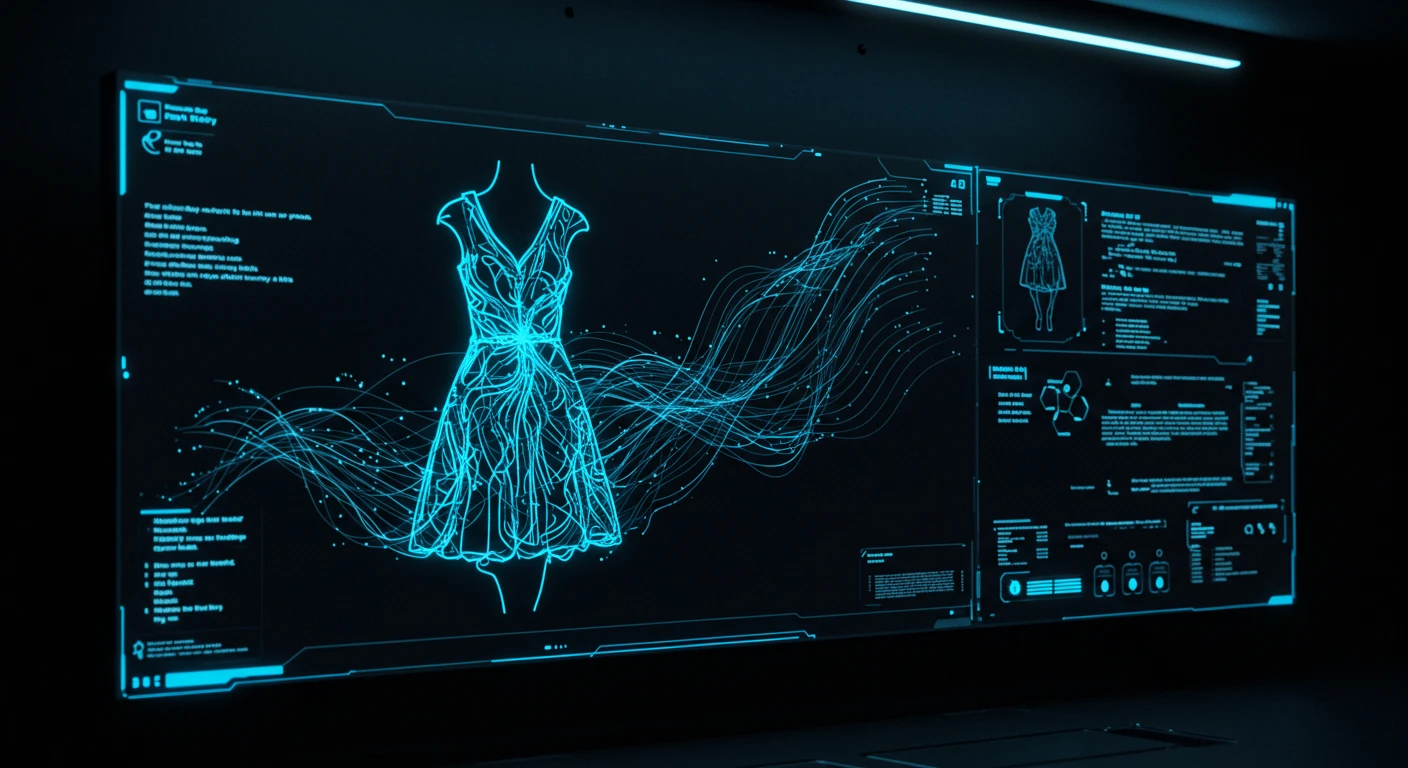
But in a surprising twist, salvation may come not from runway activism or recycled jeans—but from machines. Artificial Intelligence (AI), often feared as a job-stealer or sci-fi villain, is becoming fashion’s unlikely hero—reshaping the industry from its roots and turning it toward a sustainable future.
This isn’t a trend. It’s a revolution—and it’s already begun.
Chapter 1: Fashion’s Dirty Secret
For years, the fashion industry has dazzled us with glamour, creativity, and fast-changing trends. But behind the curtain lies a brutal truth:
- It emits more carbon than international flights and maritime shipping combined.
- It generates over 92 million tons of textile waste each year.
- It guzzles 79 trillion liters of water annually.
- Most of its workers earn poverty wages.
Fast fashion has turned clothing into a disposable commodity. A shirt that costs less than a sandwich is produced at enormous environmental and human cost. This crisis has left consumers torn: we crave self-expression but feel complicit in a destructive cycle.
Now, something extraordinary is happening.
Chapter 2: AI Steps Onto the Runway
While the fashion world was caught in the chaos of climate backlash, a quiet technological force was getting dressed backstage. It’s AI.
Not just the stuff of tech labs and sci-fi films, real AI, already working behind the scenes of your favorite fashion brands, silently transforming the industry. And it’s not just helping, it’s rethinking everything.
Chapter 3: Designing with Precision, Not Excess
In traditional fashion, designing starts with a creative hunch. But those hunches often lead to overproduction; millions of pieces made that nobody ends up buying.
AI doesn’t guess. It knows.
Using algorithms that scan millions of social media posts, search trends, retail data, and even weather patterns, AI tools like Heuritech and Stylumia can forecast what customers will want, weeks or even months before they know it themselves.
This means:
- Only what people love gets made.
- Waste is slashed.
- Designers get superpowers.
In a world where 30% of clothes go unsold, this is nothing short of a miracle.
Chapter 4: Smarter Materials for a Sick Planet
The next step? The fabric.
Traditionally, fabrics are chosen for aesthetics or cost. But AI looks deeper. It analyzes life-cycle data, how much water, energy, and carbon each material uses, and offers eco-friendly alternatives that humans might miss.
Imagine swapping:
- Conventional cotton for organic hemp.
- Plastic-based polyester for seaweed fiber.
- Cow leather for lab-grown mushroom leather.
Futuristic? Yes. But it’s already happening with the help of AI-guided innovation.
Chapter 5: Reinventing the Supply Chain
The fashion supply chain is a tangled mess of delays, inefficiencies, and environmental destruction.
AI slices through that chaos.
Through predictive analytics, it anticipates demand with pinpoint accuracy. Brands no longer need to flood stores with excess stock “just in case.” They produce what’s needed; no more, no less.
AI also shines a light on dark corners of the supply chain. Using blockchain, satellite data, and computer vision, it exposes:
- Unethical labor practices
- Environmental violations
- Greenwashing
With transparency comes accountability, and better choices.
Chapter 6: The War on Waste and Returns
Online fashion is booming, but it’s also behind a massive spike in returns. Each return means more trucks on the road, more packaging, more pollution.
AI is fighting back.
Tools like True Fit and Fit Analytics analyze body types, purchase history, and sizing charts to recommend the right fit the first time. Some platforms such as Zeekit even offer virtual try-ons so you can see how a dress will look without ever stepping into a store.
Fewer returns. Fewer emissions. Less waste.
Chapter 7: Your Digital Wardrobe, Curated by AI
What if your closet knew your values?
AI-powered apps now help consumers shop based on what matters to them: sustainability ratings, labor practices, and environmental impact. Apps like Good On You score brands, while AI tailors results based on your style, budget, and ethics.
It’s personal shopping with a conscience, and it’s catching fire with Gen Z and Millennials.
Chapter 8: The Rise of Circular Fashion
Let’s face it—fashion can’t be sustainable unless it’s circular. That means keeping clothes in use, repurposing materials, and designing for reusability.
Here again, AI is leading the charge.
- Sorting robots use computer vision to identify fabrics and separate them for recycling.
- Digital passports embedded in clothing tell you how to resell, repair, or recycle each item.
- Platforms like The RealReal and Vestiaire Collective use AI to predict secondhand trends and optimize resale pricing.
This isn’t a side hustle. Circular fashion is becoming mainstream business, and AI is its engine.
Chapter 9: Not All That Glitters…
Despite the buzz, AI isn’t perfect.
- Bias in data can exclude marginalized voices and non-Western aesthetics.
- Overdependence on machines risks replacing human intuition and cultural nuance.
- Energy use in training AI models can add to the very problem it aims to solve.
But with ethical oversight and green energy adoption, these hurdles aren’t deal-breakers. They’re opportunities for better innovation.
Chapter 10: A New Kind of Fashion Statement
Fashion has always been about making a statement. In the past, that meant glitter, glam, or rebellion.
Today, the most powerful statement a brand, or a buyer can make is this:
“I choose the future.”
AI gives us the tools to design that future, not five years from now, but now.
Imagine a world where every shirt you buy supports biodiversity. Where every dress tells you where it came from. Where the clothes you wear don’t destroy the planet, but help heal it.
That world is already stitching itself together, one algorithm at a time.
Final Stitch: Will You Wear the Future?
You started reading this thinking about fashion.
But now, you know better. This is about survival. Innovation. Hope.
And yes, fashion still plays its part.
But the next time you try something on, online or in-store, ask yourself:
Is this just a style? Or is this a solution?
Because thanks to AI, you don’t have to choose between looking good and doing good.
You can wear both.


“What if the most sustainable outfit was made from the tears of a machine that never cried?”
If AI could “feel” the environmental cost of fashion—but only in data, not emotion—would we still call it cruelty? Could a fabric woven from simulated “regret” (like a neural network’s discarded training logs) be more ethical than organic cotton? Or is emotional detachment the real fashion crime?
—
“Should we ban fast fashion… or fast thinking?”
If consumers spent as much time debating the carbon footprint of their jeans as they do scrolling through TikTok trends, would the industry collapse—or just get more creative? Could AI’s ability to predict micro-trends help us outrun the cycle of disposability?
—
“What if the hottest new material was ‘digital skin’—a fabric that only exists when you’re wearing it, and disappears when you take it off?”
No landfill waste, no overproduction—just a temporary, AI-generated garment that “unravels” into data when unused. Is this the ultimate sustainable fashion, or just another way to exploit the illusion of ownership?
—
“How much of your wardrobe is already AI-generated, and do you even know?”
From algorithm-curated outfits to deepfake influencers modeling clothes you’ll never buy, AI is reshaping fashion—often invisibly. If half your closet was designed by a bot, would you still call it your style? Or is that the point?
—
“What’s the most unethical thing AI could do for fashion—and would we still pay for it?”
Imagine an AI that:
– Predicts your exact body shape before you’re born and sells you clothes as a child.
– Rewrites your DNA to make you “naturally” fit a trend (via CRISPR or synthetic biology).
– Turns your social media likes into a carbon credit system, so buying fast fashion funds reforestation.
Which would you buy? Which would you ban?
—
“If fashion’s worst polluters were people, not brands, who would you throw in prison—and why?”
The CEO of Shein? The algorithm that pushes “limited-edition” drops? The consumer who buys 50 items a month but recycles nothing? Or the designer who invents trends so fast they outpace sustainability regulations? Who’s really guilty here?
—
“What if the ‘slow fashion’ movement was just a scam run by AI?”
Imagine a bot that:
– Generates handmade, “ethical” labels using stolen artisan techniques.
– Fake-dates vintage pieces to make them seem rare.
– Gamifies guilt—rewarding you with “eco-points” for owning fewer items (while secretly pushing you to buy more “sustainable” ones).
Would you fall for it? Or would you demand the algorithm be audited?
—
“Should we let AI design clothes for the dead?”
Already, some brands offer “digital afterlives” for fashion—like NFTs of deceased influencers modeling their final looks. But what if AI created a posthumous wardrobe for you, using your old photos, DNA, and even brainwave data? Would it be respectful… or just another way to exploit memory?
—
“What’s the most absurdly specific AI fashion trend you’d pay for—and why?”
Pick one:
– A jacket that changes color based on your stress levels (measured by your phone’s microphone).
– Shoes that whisper your shopping list when you step on them.
– A dress that grows mold intentionally as a “living” art piece—because “biodegradable” is now cool.
– Clothes that only fit you when you’re lying, designed to encourage bedrest.